If you’ve been wondering “Are home batteries worth it?”, “Will a battery save me money?”, or “Should I install a home battery with my solar system?”, you’re not alone.
These are some of the most common questions Australians are asking as electricity prices continue to rise and government battery rebates make home energy storage more affordable than ever.
For years, solar panels have been one of the best ways to reduce household electricity bills. By generating your own electricity during the day, solar can significantly reduce the amount of power you buy from the grid.
However, solar has always had one major limitation.
Solar panels only generate electricity while the sun is shining.
Most Australian families use a large portion of their electricity in the morning and evening—when solar production is low or has stopped altogether. This means many homeowners have continued buying electricity from the grid during the most expensive times of the day.
At the same time, solar feed-in tariffs have continued to decline across Australia. Instead of being well rewarded for exporting excess solar energy, many homeowners now receive only a small credit for electricity they send back to the grid, only to buy that same electricity back later at a much higher retail price.
This is exactly why home battery storage has become one of the fastest-growing energy investments in Australia.
A solar battery stores the excess electricity your solar system produces during the day so you can use it during the evening and overnight. Instead of selling your energy cheaply and buying it back at a premium, you’re using more of the clean energy you’ve already generated.
Government incentives have accelerated battery adoption, with around 500,000 Australian households installing a home battery over the past 12 months. As battery technology continues to improve and electricity prices remain high, more homeowners are asking whether now is the right time to invest.
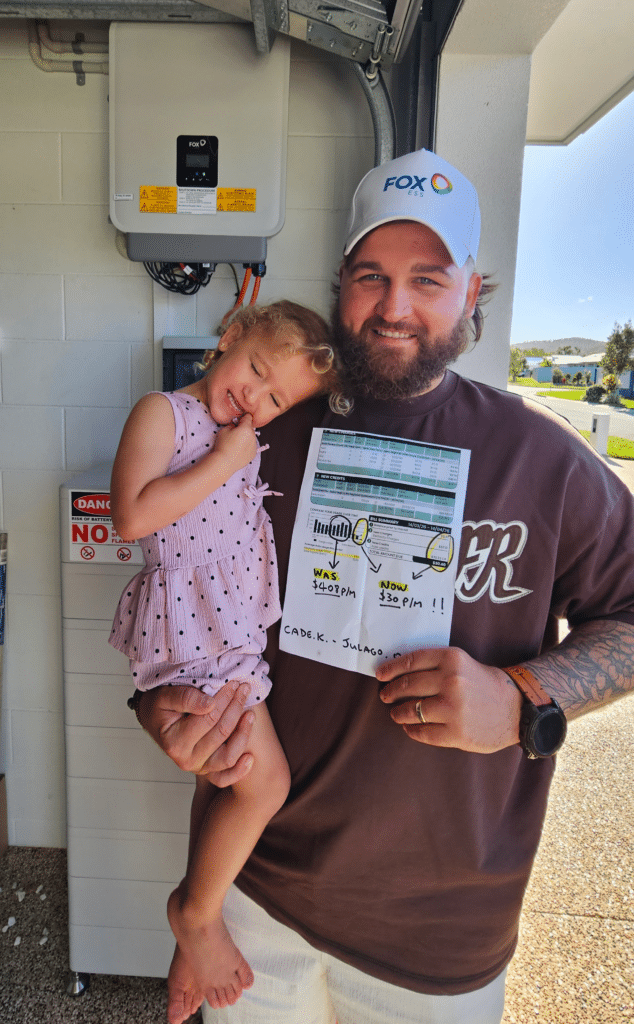
Home Batteries Don’t Just Save Money – They Can Help Build Wealth
Reducing your electricity bill is only part of the story.
Every dollar you no longer spend on electricity is a dollar that can be redirected towards your family’s future.
The table below compares common monthly electricity bills with investing those same monthly savings into a diversified investment portfolio averaging 7% per annum over 15 years. While investment returns are not guaranteed and past performance does not guarantee future returns, the example demonstrates the potential long-term opportunity created by reducing ongoing energy costs.
For example, a household that saves approximately $300 per month on electricity and consistently invests those savings could create an almost $150,000 improvement in their financial position over 15 years compared with continuing to pay that money to an electricity retailer.
| Monthly Amount you are currently spending | Total Spent on Power Bills for next 15 Years | Investment Value After 15 Years if you invested it instead. | Difference in Financial Position |
| $200/month | $36,000 | $63,393 | $99,393 |
| $250/month | $45,000 | $79,241 | $124,241 |
| $300/month | $54,000 | $95,089 | $149,089 |
| $350/month | $63,000 | $110,937 | $173,937 |
| $400/month | $72,000 | $126,785 | $198,785 |
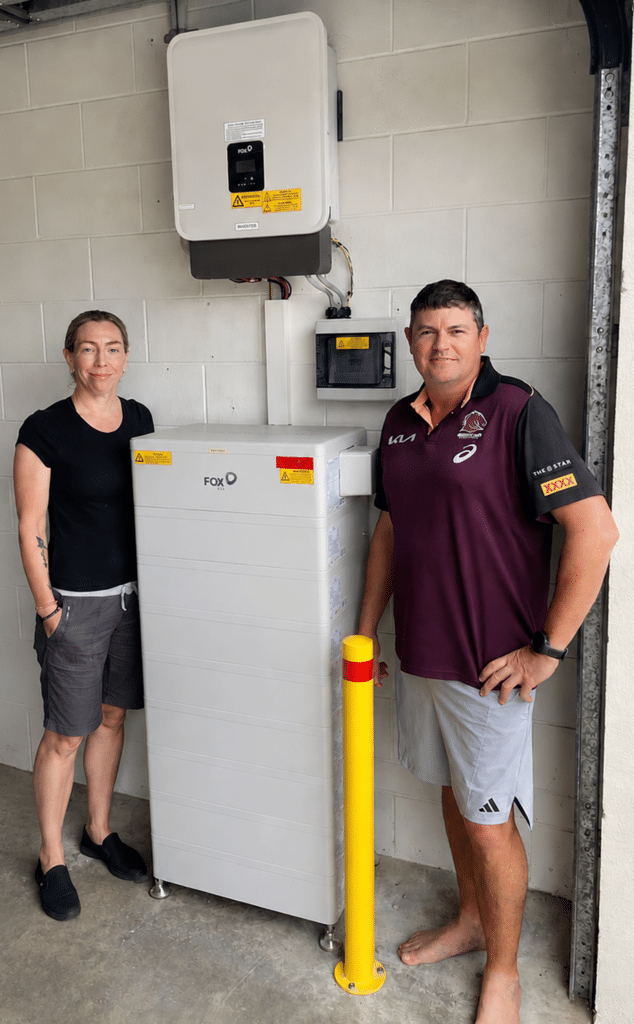
If your battery reduced your electricity costs by around $300 per month, and you redirected those savings onto your mortgage, on a $500k home loan this extra $300/month could reduce your home loan by approximately 6.5 years and save up to $142,000 in interest (assuming a 30-year loan at 6% p.a.).
There has never been a more important time to consider using up to $6000 in Home Battery Rebates to remove those stubborn energy bills and provide back up power for your home this cyclone season.
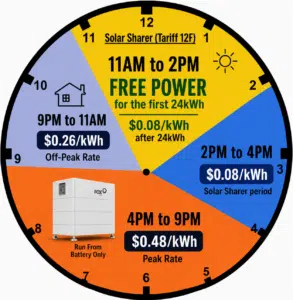
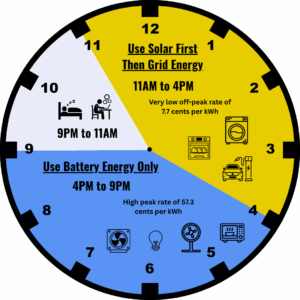
Take advantage of the 3 hours of free power with Ergon’s new Tariff 12F by installing a home battery that can deliver 24 hours of free power!
Contact our team to find out more here
Disclaimer: The figures and examples provided in this article are for illustrative purposes only and are based on a number of assumptions, including investment returns, electricity savings and interest rates. They are not intended to constitute financial, investment or tax advice and should not be relied upon as such. Investment returns are not guaranteed, and actual outcomes will vary depending on individual circumstances, market performance and energy usage. We recommend seeking independent financial advice before making any investment or financial decisions.

Founder of Horan & Bird. Director of Master Electricians Australia and Board Member of Solar Accreditation Australia. John has played a key entrepreneurial role in the transformation of the Energy Landscape in Queensland.