Investing back in your own HOME may become the Best Investment
For decades, Australians have been taught the same thing: buy investment properties, negative gear them, and rely on capital growth supported by the 50% Capital Gains Tax discount.
But the rules are changing.
The Federal Government has now proposed major reforms to negative gearing and Capital Gains Tax (CGT), including:
- Restricting negative gearing on established homes
- Replacing the 50% CGT discount with a new indexed system
- Increasing tax on future investment gains for many Australians
At the same time, there are no changes to the family home CGT exemption.
That means Australians may increasingly ask a different question:
“Instead of investing extra money into highly taxed investments… should I invest into reducing my own living costs tax-free?”
For many families, the answer could now be yes.
The New Tax-Free Investment Opportunity Sitting in Your Garage.
Let’s use the example of putting $15,000 into a quality home battery system.
Instead of chasing uncertain investment returns, that battery can:
- Reduce your electricity bills dramatically
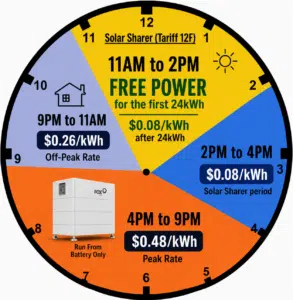
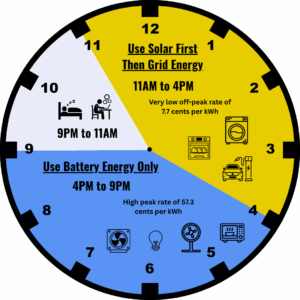
- Store cheap solar power during the day
- Protect you from future electricity price rises

For many Queensland homes, especially with solar already installed, a battery could realistically save around:
$3,000 + per year
That is effectively a:
20% annual return
And unlike shares, investment properties, or managed funds:
Those savings are TAX FREE.
Because reducing your personal household expenses is not taxable income.
Let’s Compare the Numbers
Home Battery Investment
- Investment: $15,000
- Annual savings: $3,000
- Return: 20%
- Tax on savings: $0
- Risk of market crashes: Low
- Protected from rising power prices: Yes
- Capital Gains Tax when selling home: None (currently)
Over 15 years:
- Estimated savings: $45,000
- Plus protection from future electricity inflation
- Plus increased energy independence
Compare That to the Share Market
The Australian share market has historically averaged roughly 8–10% returns over long periods before tax and inflation.
But investors may now face:
- Reduced CGT concessions
- Higher effective taxation
- Market volatility
- Dividend tax implications
- Ongoing uncertainty around future tax policy changes
To achieve the same tax-free $3,000 annual benefit from shares, many Australians would need:
- Significantly larger investments
- Higher risk exposure
- Ongoing taxation on profits and dividends
The Family Home Is Becoming More Valuable
For decades, the family home has quietly been Australia’s most tax-effective asset.
Now, with potential reductions to investment property tax benefits, improving your own home may become even more attractive.
That could include:
- Solar systems
- Battery storage
- EV chargers
- Energy efficiency upgrades
- Home electrification
Because every dollar you save on living expenses is effectively:
- Guaranteed
- Tax free
- Immediate
- Protected from future energy price rises
The Smart Investor of the Future?
The traditional Australian investment model has been:
- Buy an investment property
- Negative gear it
- Wait for capital growth
But future wealth creation may increasingly look like:
- Own your home
- Reduce household expenses permanently
- Electrify everything
- Generate tax-free savings for decades
And unlike many investments, you can actually see and use the benefits every single day.
Final Thoughts
Nobody knows exactly how future tax rules will evolve.
But one thing is becoming increasingly clear:
Reducing your own living costs tax-free may become one of the smartest investments Australians can make.
A battery may not just save power.
It may become one of the highest returning, lowest risk, tax-effective investments available to homeowners over the next 15 years.
If you already have solar, now may be the perfect time to explore whether battery storage makes financial sense for your home.
For advice on solar batteries, energy savings, and future-ready homes, contact Horan & Bird Solar.

Founder of Horan & Bird. Director of Master Electricians Australia and Board Member of Solar Accreditation Australia. John has played a key entrepreneurial role in the transformation of the Energy Landscape in Queensland.